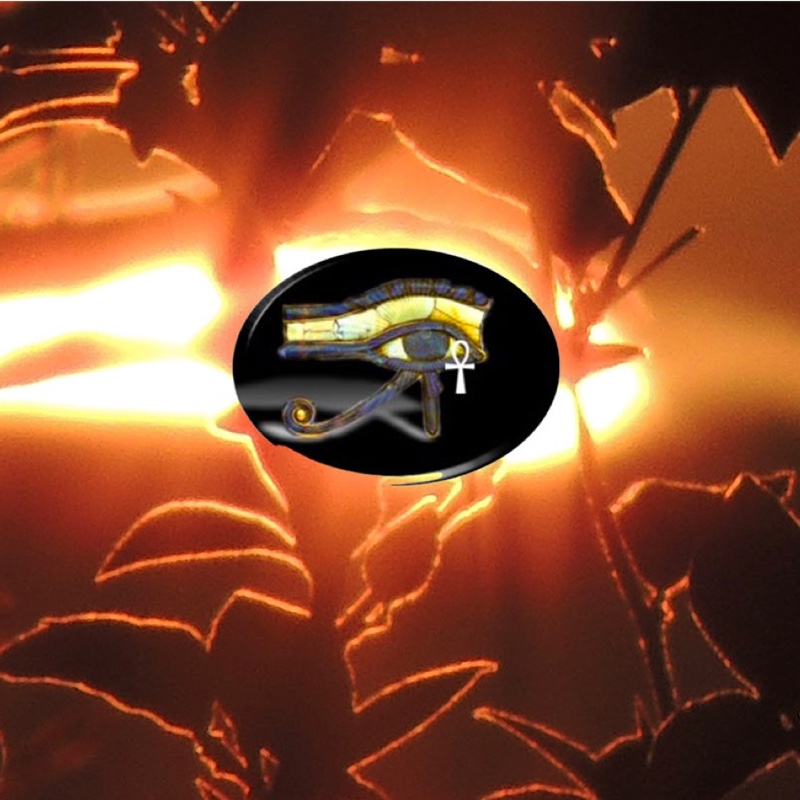
My entry for Art House Co-op’s 2012 Sketchbook Project World Tour

Theme:  Travel With Me
Sub-theme: The Books of the Dead

Posted in Art, Art & Photography Techniques, Consciousness, Digital Printmaking, Drawing, Monoprints, Printmaking | Tagged , , | 1 Comment

More on My Problems with Writing Dialogue

"Hi there, handsome. Looking for a good time?"

“There’s an ape on my balcony”.
“Well as long as you only snog it, I’ll forgive you”.

That’s the opening to a conversation I had over the phone with my husband. He was in Gibraltar, in his hotel room. He sent me photos of his ape by email.

“Did you get the photo of the ape”.
“Yes. And I take it back”.
“What’s that?”
“Forgiveness. I take it back.”
“Why’s that?”
“She’s better looking than me”.
“Not by much”.
“So did you?”
“Snog her? Of course not, even if she is better looking than you”.
“So what did you do with her?”
“I gave her a banana”.
“Is that a metaphor?”

"Isn't this the cutest ... you ever did see?".

My husband has to travel quite often.  This is a fairly typical example of the sort of ‘comedy act’ dialogue we tend to have over the phone. Written down, it’s not too bad, is it? Why then does writing dialogue for my characters render me, or rather them, speechless?

In my previous blog about problems with writing dialogue, I mentioned having seen a TV interview with Man Booker Prize winner Hilary Mandel and that she’d said she wrote by turning her notes into dialogue.  I got hold of one of her books: Wolf Hall. And noticed that I came away from her scenes with images.  That I was going to go through my manuscript (Flint & Feather) and revise each scene with the question: “What images do I want to give to the reader in this scene“.

I’m still reading Wolf Hall. It’s a fictionalised version of the life and times of Thomas Cromwell (1485-1540). From humble beginnings he rose to become Henry VIII’s Chief Minister, from 1532-40.  Then, alas, he was beheaded. I’m also reading Mandel’s Beyond Black, a novel of a very different genre. Beyond Black’s bout the lives of and relationship between a psychic medium and a woman who becomes her personal assistant. I’m intrigued that the psychic is a lady of size and the assistant is very much the opposite. I am curious to know how this contrast will play out.

"See my shoes anywhere?"

“What images do I want to give to the reader in this scene?” hasn’t been a bad idea. Where it’s falling down is that it still doesn’t present me with a method of giving the reader images.  And I found myself pondering this recently – during the night, as usual! – and I kept coming back to Mandel’s statement about turning her notes into dialogue. And it came to me that I should do another sweep through my ms., thinking of my scenes as notes to turn into dialogue and looking at everything I’d written that isn’t dialogue.
 
And I found my method. 
Here’s an example.

This is the beginning of Scene 8 from Flint & Feather:

Green oblongs floating above a crimson circle.

It seems descriptive. Well, it is descriptive. And nothing but. Now watch what happened when I put quotation marks around it:

“Green oblongs floating above a crimson circle”.

What was just description is now being spoken by one of my characters. My main character in fact. As originally written, this is the point of view of an omniscient voice.  It’s narration, (i.e. the author’s voice (mine) sticking her pen in where it shouldn’t ought to be). I don’t want narration. I want the action in my scenes to be presented to my readers (if I ever get any) filtered through to the minds then lips of my characters, from cameras on their heads.

"Can't hang around here all day".

Putting quotation marks around this passage has forced me to ask who is saying this and why.  Well I have an idea why it’s in the scene – the image I want to create. Now I have to ask myself if this is the best way of creating this image. And in the process I came up with even more:

“Green oblongs floating on a crimson circle.  A circle of crimson blood”.

There are two characters in this scene.  Putting quotes round these words means one of them has spoken.  The words have to fit my character’s well, character. And it obliges the other character to react (even if by silence).

I’ll now go through my ms. and put quotes round any passages presently without them and see what happens.

I feel a bit like Baron Frankenstein, only this way I’m shocking my characters into life without wasting a single watt of electricity!

Of course, this is just one way of fashioning scenes. There are many, some of which no doubt I’ve yet to hear.

That ape (which is really a monkey by the way) deserves a whole bunch of bananas.

Ann

http://en.wikipedia.org/wiki/Barbary_Macaque
http://en.wikipedia.org/wiki/Thomas_Cromwell

Posted in Dialogue, Fauna, Writing | Tagged , , , , , , , , | 2 Comments

Aftermath (and a tour of my studio)

I avoided missing the deadline, of 31st January, for Art House Co-op’s 2012 Sketchbook Project by 28 minutes. I can be that precise because I looked up at the huge clock in my little local Post Office just as the dated stamp was being attached to the packet containing my entry.

I’d had it fixed in my head that the deadline was the end of February. It was only by chance – in the form of an email from a fellow participant – that I discovered my mistake.

Instead of just over 5 weeks, I had only 8 days to meet the deadline. Not even that.  The 8 days shrunk to 7 as one of them fell on the day of the London Art Fair for which I’d bought tickets -  for 2 – and I wasn’t about to miss the event or waste the price of the tickets. Then my time shrivelled up a further half day by the stop motion animation workshop I was booked into, led by artist Reza Ben Gajra.  In reality, I had just 6.5 days to do work I thought I had 5 weeks to complete.

The theme I’d chosen for my Art House entry was Travel With Me.  As soon as I started to think about this theme and the places I’ve traveled to – whether on foot, or by train, plane, bus, taxi, or boat, for work or pleasure – I had a realisation. Out of this realisation came the title for my entry, The Books of the Dead.

I couldn’t face throwing in the towel on this project, yet all I had, with less than a week before the deadline, was the concept in my head.  Luckily, what I had in my head turned out to be a whole suite of inter-related projects. Even so, it would still mean working flat out and often into the night, in order to get it all together.  On D-day, I did quite a bit of deep breathing! When I closed the front door behind me after posting off my entry, I admit to a short fit of hysterics – the sort where you alternately laugh and cry uncontrollably!

I didn’t just chuck anything into the sketchbook. I may not be an artistic genius, but I’m not dishonest. Integrity must be part and parcel of artistic practice. Otherwise, what’s the point?  And I’ve amazed myself at my focus.  And the appearance of that mysterious smoke-like energy we call flow that came to speed me along. Also, the even more mysterious manifestation of Presence (the force that is more than inspiration) that placed ideas into my head beyond my own ingenuity and turned my hand in the direction of materials which I would never have had the guts to use.

No, I’m not a genius, but I believe it’s my most focused work ever and each page a seed – be it oddly shaped and ugly – a sub-project to develop.

The photos presented here are of the wreckage of my studio the day after D-day. Most of the rooms in the house were similarly wrecked!  Hence the header of this blog AftermathAftermath also relates to my Art House project. I’ll be writing about that soon, and setting up a slide show but if you can’t wait (!) I’ve uploaded my pages to my Art House Co-op web page.

The photos here are also a mini-tour of my studio. The room needs updating, but I enjoy being and working in this space.  It’s an attic, small, intimate. I once had a vast studio in a wonderful setting – the image that heads all of my blogs is derived from a photo taken from one of its windows – but I could do nothing in it.  After I lost the space, I realised that its size and importance had intimidated. My attic studio equates to my mindset – it is full of doors to new spaces and adventures waiting to come alive.

The piece of furniture is a set of drawers from a printer’s office. At one time the drawers (it has 32) would have contained sets of type. It’s solid pine and heavy. Originally stained orange and coated in a treacly varnish I painted and distressed it. It still needs knobs. I spent maybe a week organising the contents of the drawers. But I didn’t keep to the plan and so I have to pull open every drawer to see what’s stored there.  A bit like 32 Pandora’s boxes (but not so dangerous).

I’d be fascinated to do a tour of your studio/writing room/creative space.

Ann

www.annisik.com
www.annisikarts.com

Posted in Ann's Publications, Art | Tagged , , , , | Leave a comment

Rainbow Accordion Book Artist Trading Card : RED

The image on the left is the trading card  I made for the MMATC (Mixed Media Artist Trading Card) Yahoo! Group project:  Rainbow Accordion Book. (In my last blog I posted the card I’d received in this card swap from artist Beth Power ). This work marks my debut into the group.

Also in my last blog I outlined the concept behind the 7-month project. There are few constraints: the design is to be non-representational/abstract; the focus of each card is one colour of the rainbow;  and they are to be made using fabric paper.

I tweaked the recipe for the fabric paper (I can never follow a recipe without tweaking it).  Instead of fusing one layer of my acid-free tissue paper to the fabric, I fused three. I swear this was not just because the cat damaged the first sheet by jumping onto it, then wading across it when wet!

Between the first and second/third layers, I added sprinklings of - no, not sugar – white quartzgrains,  size no. 5, in fact from a bag I bought for another project while still living in France. The quartz grains would normally go into an aquarium. They are a better alternative, for adding texture, than sand, as they don’t crumble.

Fabric Paper, embedded with white quartz

Because I’d painted the fabric red before adding the tissue paper, then painted that red too, the quartz absorbed the colour. When dry, I lightly sanded the surface to encourage some of the now reddish quartz grains through the surface of the paper.

I decided to stick with the rainbow concept for my design. Brainstorming the word rainbow I came up with with words such as transparency, ray, weather, rain, bow, weather, map, meteorology, raindrops, sunshine.

The strips of  red acetate I added are a nod in direction of transparency. There are also strips of coloured hessian string which I knotted at intervals before fastening them to the surface of the card with glue and the odd stitch – again in hessian. I used near- and complementary greens and blues for the stitching, to vivify the red where the colours collided.

The knots are to do with the symbols of dots and flags that you find on weather maps. I printed off some maps, dampened and crumpled them, ironed them dry, then tore them into strips. This accounts for the spattering of other colours in the work.

The card was to be 6 x 6 inches. I cut a window of that size from printer paper. When I was satisfied with an arrangement of all the elements on my fabric paper, within my 6 x 6 window, I took photos, manipulated these on the computer with Photoshop, then printed them off and re-did the arranging process until I was completely satisfied, glued it all down onto my fabric paper, added the string, acetate and stitching.

I fused the front of the card to a back sheet made from the muslin used to make the paper. I painted this red with acrylic paints, which rendered the sheet stiff when it dried. I stiffened the card by fusing a layer of medium white iron-on Vilene Interfacing to the back of the front of the card (this is the stuff used to stiffen collars in shirts and blouses).  I bonded the back of the card to the front using  Heat’n'Seal’ (Ultra) (a double-sided fusing fabric) manufactured by Hemline Groves. And of course, I turned hems in all round to make the card look neat. To finish off the back of the card, I glued a narrow strip of transparent (organza-type) red ribbon along the edges of all four sides.

If you think I sound like I knew what I was doing, it was all completely experimental and new to me! I’d never heard of Vilene Interfacing or Heat’n'Seal Ultra before this project and the fact that everything worked first time was fluke and luck!

I am fortunate however, to live in close proximity to a craft/art emporium, staffed with experienced artists/crafters.  All I had to do was to go in and ask, “have you got anything to stiffen fabric?”

So I’ve learned, in making this card:

- how to make fabric paper
- about iron-on interfacing and fusing and how to use it
- improved my brainstorming skills
- that I should keep the cat out of my working environment

Related articles

How to make Fabric Paper:
http://www.squidoo.com/FannieFabricPaper
http://www.joggles.com/fabricpaper.htm
http://alteredbelly.blogspot.com/2011/01/making-fabric-paper.html
http://www.crafttestdummies.com/craft-projects-2/fun-with-fabric-paper-quick-how-to/

Ann
www.annisik.com
www.annisikarts.com

Give me a treat and I'll move away from in front of the tellie!

Posted in Art, Art & Photography Techniques, Artists Store, Fabric Paper, Mail Art, Painting | Tagged , , , , , , , , | Leave a comment

MMATC Group Rainbow Accordion Book: Red

RED: Beth Power: www.naturalinspirations.blogspot.com

MMATC (Mixed Media Artist Trading Cards) is a Yahoo! group of artists based in the UK. I was pleased to be accepted into the group late last year, though I’ve only just this year been able to make my debut, joining the group’s Rainbow Accordion Book swap. The idea is that every month participants each makes a card based on one colour of the rainbow and sends it to one of the other participants.  The first colour to interpret was red, being the outermost colour of a rainbow (visible to the human eye). All 7 colours achieved, we each make up the cards we’ve received into an accordion book.

The images here are the front and back of the beautiful card sent to me by artist and textile student Beth Power.  Check out her blog: Beth’s Natural Inspirations.  (Not to be missed on the blog is the display of paintings on feathers).

Beth told me that in part her inspiration for Red was a piece of artwork by textile artist Ann Small which she came across in the book Layered Textiles: New Surfaces with Heat Tools, Machine and Hand Stitch by Kim Thittichai.

I decided to seek out a group of Mail Art artists based in the UK after participating last year in Kat Sloma’s  international postcard swap. I got such a buzz from the sending and receiving of art postcards.  It’s important to connect up with other creatives as art-making is a solitary pursuit and can be isolating and lonely. Going out and looking at other artists’ work is a must, for inspiration, for replenishing one’s well of images; but swapping small pieces of art is arguably better because it’s more than just looking. It’s tactile and you can see the materials, textures and techniques close-up and – it’s yours to keep forever.  And owning might just be a sensory perception – receiving gifts of art certainly brings on a sense of abundance.

Creating with a group of practising artists/craftspeople also means learning new techniques and materials.  For instance, my interpretation/contribution of Red for the Rainbow Accordion Book introduced me to fabric paper. All cards for the accordion book were to be made from fabric paper and a recipe was provided.  I’ve made paper in the past, but fabric paper was a new concept. It involves gluing soppy muslin to a sheet of soggy tissue paper. Painting or dyeing the fabric/paper is also an option. I made a large sheet using three layers of acid-free artist’s tissue paper, of which I had a large wadge. I painted the muslin red.  (By the time I’d finished I looked like I’d taken part in a chain saw massacre!  And so did the cat, who, right at the very end, decided to jump onto my table and plodge across my newly-made sheet)!

In my next blog I’ll post my own Red artist’s card and describe how I made it. It was quite a learning curve, especially because my background as an artist is in Fine Art, not textiles but I had to find a way of putting this card together so that at the very least, it survived the postal system.

Posted in Art, Art & Photography Techniques, Fabric Paper, Mail Art | Tagged , , , , | Leave a comment

More on iPad Apps for Artists

Since posting my iPad drawing (The Old Brass Kettle) – created using Sketchbook Pro - I’ve been trying out other iPad apps for artists, specifically, My Brushes and Brushes.

Believe me or not, when I blogged about Sketchbook Pro, I had no idea of David Hockney‘s upcoming exhibition of work which include paintings done on his iPad.  Call it zeitgeist, but as soon as I published my Old Brass Kettle blog, Hockney turned up all over TV with his iPad, talking about his upcoming Royal Academy exhibition and how he made some of the paintings using an iPad. In fact, he’s recently exhibited Fresh Flowers which are paintings done entirely on his iPad. (No doubt Fresh refers not only to the state of the flowers, but also to the new way of making the works).

I was desperate to know what app Hockney uses. I heard him mention brushes  and at first came up with the app My Brushes.

I did the drawing above using My Brushes.  I like the app, though have three issues with it. First, there was no quick way of finding out how to get my drawing off the iPad.  Eventually, I found the drawing in my iPad’s photo folder and was then able to transfer it to my laptop.

The second issue is that I’m left-handed and I have that in common with many artists. The paintbox for this app is situated on the bottom left of the iPad screen.  That’s right under my left wrist.  And I found that my wrist, dragging across the palette, changed the colour on my brush to something else while I was working.  Not only that, there was no way it seemed of going back to the original colour, except by setting it up again and I ended up with only an approximation of what I had been using. After this happened a few times, I began to get irritated.

The third issue is that despite sending to emails to My Brushes Customer Support, I’ve yet to get a reply.

I can talk about another app here, because I transferred my drawing made on My Brushes using an app called Dropbox.  What you do is install Dropbox on your iPad and then again on your computer(s)/iPhone.  When you drop something into Dropbox it is immediately beamed-up to all your other devices.

I then discovered that Hockney uses an app called Brushes and did some figure drawings using that. I also started a landscape painting but that’s not finished yet.  I have some things to discover yet with this app – well all of them actually.  I might find I use several apps to make one drawing or painting.  I read Hockney uses more than one app.

This is not Hockney’s first adventure with new tech.  I have a pull-out from a magazine stored away somewhere, an article with images from more than 10 years ago, even before the advent of the laptop computer.  Hockney made the images – which were as I recall, of his house in California – using software that I only remember as Lightbox.

Once I had transferred my drawings to my laptop, I could do what I liked with them. The one at the top of this blog is a fusion of two drawings which I did using Photoshop Elements 9.  The figure who modelled for me is actually a wooden artist’s mannikin I recently bought.  I placed it on a mantlepiece in front of a big mirror.  I liked the way the image was mirrored back differently to the original and the new forms created by the negative spaces between the real mannikin and the one in the mirror.  Overlaying the two drawings added another dimension, so the drawing has ended up with 4 different realities.  (You will have to overlook the poor foreshortening of the real mannikin’s upraised leg)!

One bonus of creating in this way is that you can save a copy of a drawing at any stage on your iPad before adding to it.  This means that if you aren’t satisfied with your end result, you can have earlier versions to go back to.  You could also take an earlier version in a different direction and end up with a suite of related works all arising from one beginning.

An entertaining attribute of Brushes is the button which re-draws your work from scratch, i.e. it takes you through all the marks you made from the first mark, through to the last, showing you the history of how you made the work. I don’t know how useful this will be yet. The re-drawing happens fast and I haven’t so far found a way of freezing the process or at least slowing it down so I can learn from myself.

I read that Hockney uses these apps with his finger. (He doesn’t always in fact as I’ve seen a photo of him painting on his iPad and he’s got a pen in his hand). I use my Bamboo Pen.  Somehow, using my finger to paint makes me feel clumsy and arthritic! Also, the pen gives my hand a bit of distance from the iPad surface and in that way I can avoid brushing across what I’m doing with my wrist. I’m going to have to get used to a lighter touch with the pen though. I tend to scrub when I draw (with the idea, I suppose, that extra pressure = a better drawing!) and I’ll wear the end off my pen in no time.  This reminds me of the run up to my degree show, when I was painting (desperately) sometimes up to 18 hours a day. I could buy a brush in the morning and by the end of the day had worn the bristles completely down to the handle!

Ann

P S  When I’ve a suite of work I think is good enough, I’ll exhibit them on my web site:  www.annisikarts.com

Also, I’d be interested in hearing from anyone who’s creating art on their iPad/tablet computer and to know what apps they are using.

PPS  In a future blog I’m going to write about apps and left-handedness. I’d be interested in hearing about fellow creative lefties and their experiences with apps and tech devices in general.

Posted in Art, iPad Art | Tagged , , , , , , , , | Leave a comment

The Old Brass Kettle

The Old Brass Kettle

The Old Brass Kettle is a drawing I made on my iPad2 – bought last autumn – using an app called  Sketchbook Pro.  I wasn’t comfortable drawing with just my fingers, so I bought myself a Bamboo Pen (Wacom). I don’t do much representational drawing these days, but I wanted to familiarise myself with the different ways of making images through Sketchbook Pro. Curiously – and this might be, for me, the application’s most important aspect, is that starting this drawing didn’t trigger my terror of the white page syndrome.

English: Seaton Sluice Harbour looking north t...

Image via Wikipedia

White Page Fright is a malady that plagues many artists, in varying degrees. I think it started during my fine art degree.  Looking back, I was no longer drawing just for the pleasure of it.  I had to perform.  To come up with the goods of greatness. A wrong mindset of course, but that’s wisdom in hindsight.

The kettle turned up in my family in about 1960, fetched home by my brother. At the tender age of 7 he was already  the scavenger by nature that was to become his profession late in his relatively short life (he died of Motor Neurone Disease in 1996).  He’d rescued the kettle from the harbour at Seaton Sluice at low tide.  I remember my mother polishing the kettle and my amazement at its transformation from the dull, black, ugly, buckled thing presented by my brother, into the gleaming, gold-coloured object it became.

The kettle has passed from one hearth to another in my family over the years since my brother dredged it from the harbour. It sits now on mine. I wonder to whose hearth it will pass next?

Ann

Posted in Art, Drawing | Tagged , , , , | Leave a comment